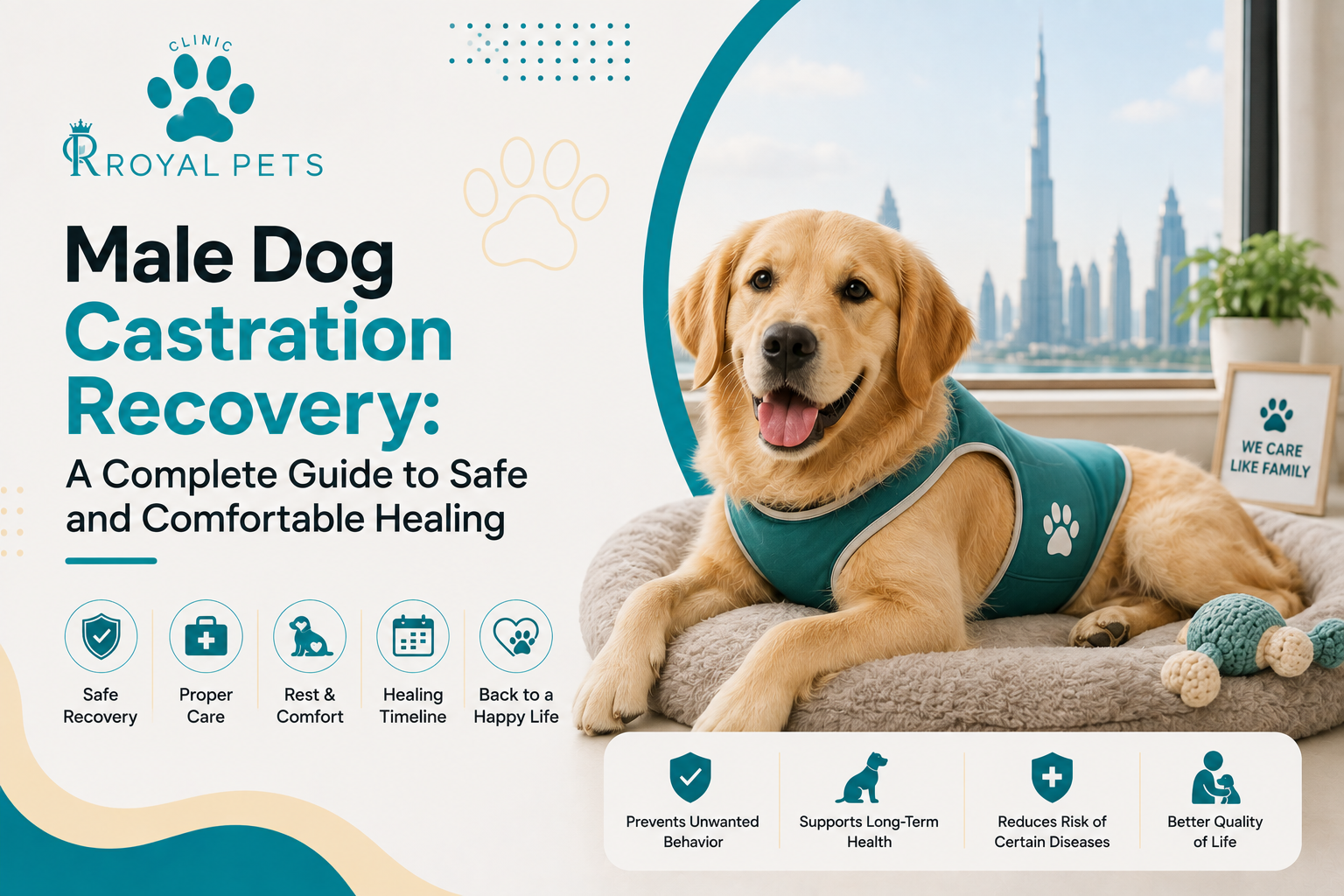
Male dog castration recovery is usually straightforward, but the days following surgery require careful attention from the pet owner. Your dog may appear energetic and ready to return to normal activities surprisingly quickly, yet the surgical incision and deeper internal tissues still need time to heal.
Most male dogs begin returning to their usual behaviour within 24 to 48 hours after the procedure. However, the main recovery period commonly lasts between 7 and 10 days, and some dogs may need up to two weeks before returning fully to unrestricted activity. Movement should therefore remain controlled even when your dog seems completely comfortable.
Understanding what is normal, how to protect the incision, and when to contact a veterinarian can make the recovery process calmer for both you and your pet. With proper home care and professional veterinary support, you can help your dog heal safely and avoid preventable complications.
How Long Does Male Dog Castration Recovery Take?
The typical dog castration recovery time is approximately 7 to 10 days. During this period, your dog should rest, avoid strenuous activity, and wear appropriate protection to prevent licking or chewing the surgical area.
Some dogs are quiet and sleepy when they return home, while others regain their energy quickly. Temporary tiredness, mild disorientation, or reduced interest in food may occur while the anaesthetic wears off.
Although your dog may appear normal within one or two days, this does not mean the incision has healed completely. The deeper tissues continue healing after your dog’s energy and appetite have returned. Running, jumping, playing, and climbing can place unnecessary pressure on the surgical site and potentially cause swelling or wound opening.
The exact recovery timeline can vary according to your dog’s:
- Age and general health
- Size and activity level
- Surgical technique
- Incision condition
- Response to anaesthesia
- Ability to remain calm at home
- Presence of a retained testicle or other medical condition
Always follow the personalised discharge instructions provided by your veterinarian, even when they differ from general online guidance.
What to Expect During the First 24 Hours
The first day is usually the quietest part of male dog neutering recovery. Your dog may sleep more than usual, appear slightly unsteady, or seem less interested in interacting with people.
Prepare a clean, quiet area inside the home where your dog can rest away from noise, energetic pets, and rough play. Comfortable bedding should be placed at floor level so that your dog does not need to jump onto a sofa or bed.
Offer water and food according to the veterinarian’s instructions. Some dogs may not want a full meal immediately after arriving home. A temporary reduction in appetite can occur after anaesthesia, but your dog should gradually become more alert and interested in eating.
Contact your veterinary team if your dog remains extremely weak, repeatedly vomits, has breathing difficulties, collapses, or shows signs that appear more severe than ordinary postoperative tiredness.
Days Two and Three: Energy Returns Before Healing Is Complete
During the second and third days, many dogs begin behaving much more normally. Your dog may bring toys, run toward the door, or attempt to jump onto furniture.
This improvement is encouraging, but it is also the point at which owners need to be especially careful. A dog that feels better may become active before the incision is strong enough to tolerate sudden movement.
Keep your dog calm and continue all prescribed restrictions. Take him outside on a short lead for bathroom breaks, then return him to the recovery area. Avoid long walks, off-lead exercise, chasing games, and interaction with energetic dogs.
Mental stimulation can help reduce boredom. Calm food puzzles, gentle attention, and quiet training exercises may keep your dog occupied without placing stress on the wound.
Restricted Activity During Dog Castration Recovery
Strict activity restriction is one of the most important parts of dog castration aftercare.
For approximately 7 to 10 days—or for as long as your veterinarian recommends—prevent your dog from:
- Running indoors or outdoors
- Jumping onto beds, sofas, or vehicles
- Playing roughly with other animals
- Using stairs unnecessarily
- Taking long or fast walks
- Swimming
- Participating in training that requires physical effort
Short lead walks should normally be limited to bathroom breaks during the early recovery period. Strenuous movement can cause the incision to swell, bleed, or open, even if your dog does not immediately show pain.
Baby gates can help restrict access to stairs, while a quiet room may be suitable for dogs that are not comfortable inside a crate. The goal is to create safe limits without causing unnecessary anxiety.
Prevent Licking and Chewing
Dogs naturally investigate uncomfortable areas by licking them. Unfortunately, licking a surgical wound can introduce contamination, irritate the tissues, remove surgical glue, damage stitches, or reopen the incision.
Your dog should wear a properly fitted Elizabethan collar, commonly called a cone, or another protective device approved by the veterinarian. The protection should remain in place throughout the recovery period, including overnight and whenever your dog is unsupervised.
A surgical recovery suit may be suitable for certain dogs, but it must fully prevent access to the wound and remain clean and dry. Because male castration incisions can be difficult to cover effectively, ask your veterinarian whether a suit provides enough protection for your dog.
Do not remove the cone simply because your dog has stopped attempting to lick. One brief period of chewing may be enough to damage the incision. Authoritative postoperative guidance recommends preventing access to the wound throughout healing.
How to Monitor the Neuter Incision
Check the surgical area every morning and evening. Regular monitoring helps you identify changes early without repeatedly touching or disturbing the wound.
A normally healing incision should generally be:
- Closed, with the wound edges together
- Clean and dry
- Free from pus or unpleasant odour
- Gradually becoming less red or swollen
- Protected from licking and moisture
Slight pinkness around the edges, limited bruising, or mild swelling may occur during the early stages of recovery. These changes should remain minor and gradually improve.
Consider taking one clear photograph of the incision each day in similar lighting. Comparing daily photographs may help you notice whether swelling or redness is increasing.
Do not apply antiseptic products, alcohol, peroxide, creams, powders, oils, or home remedies unless the veterinarian specifically recommends them. Unapproved products may irritate the tissues or interfere with healing.
Keep the Incision Clean and Dry
Bathing and swimming should be avoided for at least 10 days or until the veterinarian confirms that the wound has healed.
Water can soften the skin and affect surgical glue or stitches. Pools, beaches, and outdoor water may also expose the incision to bacteria or debris. General postoperative guidance recommends keeping the surgical area dry and avoiding bathing during early healing.
This is especially relevant during male dog castration recovery in Dubai, where dogs may encounter swimming pools, sand, dust, and high outdoor temperatures. Keep bathroom breaks brief during hot conditions and provide a cool, clean indoor recovery area.
If the incision becomes wet accidentally, contact your veterinary team for advice rather than rubbing or cleaning the area aggressively.
Feeding Your Dog During Recovery
Continue feeding your dog’s usual food unless different instructions have been provided.
Avoid introducing new foods, rich treats, table scraps, or fatty meals during recovery. Sudden dietary changes can cause vomiting or diarrhoea, making it more difficult to determine whether the symptoms are related to surgery, anaesthesia, medication, or food.
Your dog’s appetite should gradually improve as the anaesthetic effects fade. Contact the veterinarian if your dog refuses all food for more than 24 hours, especially when the loss of appetite occurs with vomiting, diarrhoea, severe tiredness, or signs of pain.
Make sure fresh water is available, but contact your veterinary team if your dog drinks excessively, cannot keep water down, or appears unable to drink comfortably.
Pain Medication After Male Dog Castration
Give every prescribed medication at the correct dose and time. Do not stop medication early simply because your dog appears comfortable unless the veterinarian advises you to do so.
Never give your dog human pain medication without direct veterinary instructions. Human products such as ibuprofen can cause gastrointestinal injury and kidney damage in dogs, while acetaminophen can also cause serious toxicity. Medication intended for another pet may also be unsuitable because doses and medical needs differ.
Contact the veterinarian if your dog:
- Cries or whimpers persistently
- Cannot settle or sleep
- Guards the surgical area
- Trembles or pants excessively
- Becomes unusually aggressive when approached
- Refuses to move
- Shows a hunched or tense posture
These behaviours may indicate discomfort that requires reassessment.
When Can Your Dog Walk Normally Again?
Bathroom breaks may usually continue as short, controlled lead outings during the first few days. These should not become regular walks simply because your dog appears energetic.
Longer walks should be introduced gradually after the incision has healed and your veterinary team has confirmed that increased activity is appropriate.
When permission is given, begin with calm lead walks rather than immediately returning to running, dog parks, rough play, or demanding exercise. A gradual increase allows you to monitor your dog for discomfort or swelling.
Dogs that underwent more complicated surgery, including surgery for a retained testicle, may require a longer or more restrictive recovery plan.
Warning Signs After Male Dog Castration
Contact your veterinarian promptly if you notice any unexpected or worsening changes.
Warning signs include:
- Continuous or heavy bleeding
- Pus or cloudy discharge
- An unpleasant smell from the wound
- Severe or rapidly increasing swelling
- Significant heat or redness around the incision
- Separation or opening of the wound edges
- Stitches falling out prematurely
- Repeated vomiting or diarrhoea
- Refusal to eat for more than 24 hours
- Severe weakness or persistent lethargy
- Whimpering, crying, or intense pain
- Difficulty urinating
- Breathing difficulties
- Collapse
Do not wait for a scheduled follow-up appointment when symptoms are rapidly worsening. Early veterinary assessment can protect the incision, control discomfort, and reduce the risk of a more serious complication.
Is Scrotal Swelling Normal After Neutering?
A small amount of swelling or bruising may develop after surgery. The empty scrotal skin may also remain visible immediately after castration and generally becomes less prominent over time.
However, pronounced, painful, firm, hot, or rapidly enlarging swelling is not something to manage at home. It may indicate bleeding, fluid accumulation, inflammation, or another postoperative complication.
Contact your veterinarian if you are uncertain. Sending a clear photograph may help the veterinary team understand the situation, but an in-person examination may still be necessary.
Behaviour Changes After Castration
Short-term behaviour changes are often related to anaesthesia, discomfort, disrupted routine, or restricted movement rather than hormonal changes.
Your dog may temporarily become:
- Sleepier than usual
- Quieter or less playful
- More dependent on you
- Restless because of the cone
- Frustrated by restricted activity
- Less interested in food
Long-term behaviours such as marking, mounting, roaming, or reactions toward other dogs do not necessarily disappear immediately after castration. Some behaviours are learned habits or have non-hormonal causes.
Focus first on physical healing. Behavioural concerns can be discussed during a later veterinary consultation once your dog has recovered from surgery.
A Simple Male Dog Castration Recovery Checklist
During the first 7 to 10 days:
- Keep your dog indoors in a quiet recovery space.
- Allow short lead outings for bathroom breaks.
- Prevent running, jumping, climbing, and rough play.
- Keep the cone or approved protective device on continuously.
- Check the incision every morning and evening.
- Keep the surgical area clean and dry.
- Avoid bathing, grooming, and swimming.
- Feed the normal diet unless instructed otherwise.
- Give only veterinarian-prescribed medication.
- Attend the recommended postoperative check.
- Contact the veterinarian if the wound or your dog’s condition worsens.
Compassionate Surgical Care at Royal Pets Veterinary Clinic Dubai
Castration is not only about the procedure itself. Safe surgery also requires careful assessment, appropriate pain management, clear home-care instructions, and reliable support throughout recovery.
Royal Pets Veterinary Clinic Dubai provides attentive veterinary care in the heart of Garhoud. The warm and friendly environment is designed to help pets feel relaxed while giving owners confidence that their questions and concerns will be taken seriously.
The clinic provides comprehensive pet examinations tailored to each animal’s age, health, and lifestyle. When further assessment is required, advanced diagnostic facilities include X-ray, ultrasound, and an in-house laboratory.
Royal Pets Veterinary Clinic Dubai also offers surgery, preventive medicine, dental care, grooming, comfortable pet boarding, and access to a fully stocked pet shop. This combination allows pet owners to receive ongoing support before, during, and after veterinary procedures.
Every dog is different. Some need additional reassurance after surgery, while others require careful strategies to control their energy. At Royal Pets Veterinary Clinic Dubai, each pet is treated with patience, time, attention, and genuine care.
Give Your Dog the Support He Needs to Heal Safely
Successful male dog castration recovery depends on teamwork between the veterinary professionals and the pet owner. Your role at home—preventing licking, restricting movement, administering medication, and monitoring the wound—is essential.
You do not need to handle concerns alone. If your dog is scheduled for castration, is currently recovering, or has developed unexpected swelling, discomfort, appetite changes, or incision problems, contact Royal Pets Veterinary Clinic Dubai.
A timely consultation can give you clear, personalised advice and help confirm that your dog’s recovery is progressing safely.
Contact Royal Pets Veterinary Clinic Dubai today to arrange a consultation or postoperative examination and give your dog the gentle, professional care he deserves.
This article provides general educational information and does not replace an examination or personalised instructions from a veterinarian.
Leave a Reply