
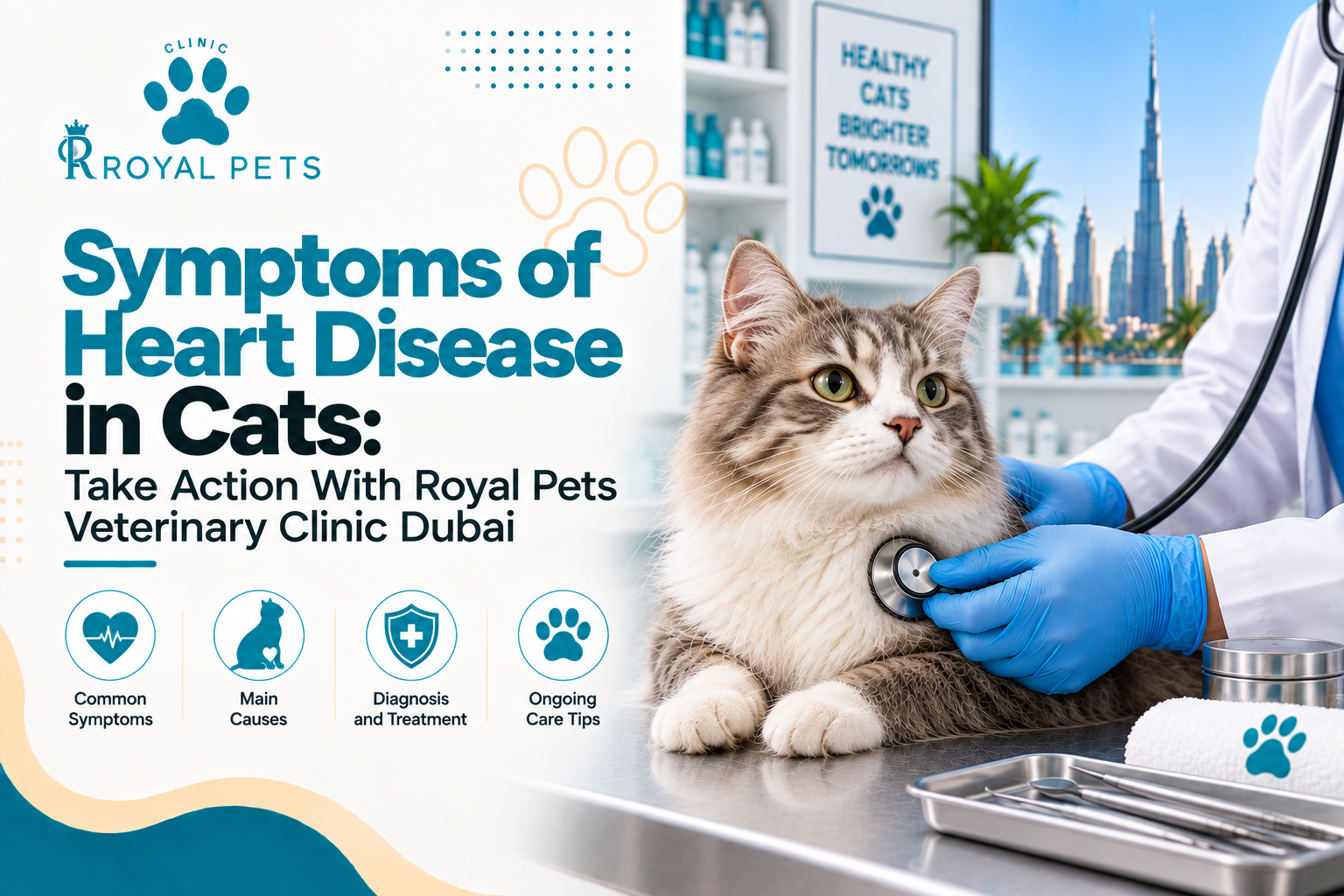
The symptoms of heart disease in cats can be easy to overlook. Your cat may play less, spend more time hiding, or develop changes in breathing that seem small at first. Many cats with heart disease show no obvious clinical signs until the condition becomes advanced, making careful observation and veterinary examinations especially valuable.
You know your cat’s everyday habits better than anyone. When something changes, seeking advice can help you move from uncertainty to a clearer understanding of what your companion needs.
At Royal Pets Veterinary Clinic Dubai, in the heart of Garhoud, your concerns deserve time, attention, and compassionate care. With comprehensive examinations, diagnostic services, and a welcoming approach, the clinic helps you take the next step toward protecting your cat’s health.
Why Heart Disease in Cats Can Be Difficult to Notice
Cats often conceal discomfort, and some heart conditions can develop without noticeable changes at home. A cat may continue eating, moving around, and interacting with family members despite an underlying cardiac problem.
One important condition is hypertrophic cardiomyopathy, or HCM, which causes the heart muscle to thicken. Some affected cats remain outwardly well, while others develop complications such as congestive heart failure or blood clots.
Heart disease and heart failure are not the same thing. Heart disease describes an underlying problem affecting the heart. Heart failure is a complication in which the heart’s function becomes inadequate, potentially causing fluid to accumulate in or around the lungs.
A veterinary examination can help identify concerns that owners cannot detect themselves. At Royal Pets Veterinary Clinic Dubai, assessments tailored to your cat’s age, lifestyle, and medical history provide a thoughtful starting point.
Early and Subtle Symptoms of Heart Disease in Cats
Subtle changes deserve attention, but they do not confirm heart disease. Several illnesses can affect energy, appetite, breathing, and behaviour. The purpose of recognising these signs is to seek appropriate assessment.
Lethargy and Reduced Interest in Playing
Has your cat become less enthusiastic about toys or stopped joining familiar activities? Reduced energy may appear as:
- Sleeping more than usual.
- Playing for shorter periods.
- Spending more time under furniture.
- Becoming less interested in exploring.
Rather than assuming these changes are simply part of ageing, discuss them with Royal Pets Veterinary Clinic Dubai. An examination can help investigate what has changed.
Decreased Appetite and Unexplained Weight Loss
Eating less or losing weight without an intentional dietary change can indicate a health problem. These signs may occur with heart disease, but they can also reflect other conditions.
Notice whether your cat leaves more food behind, approaches meals less often, or feels thinner when you gently stroke them. Sharing these observations helps the veterinary team understand the pattern.
Faster Breathing While Resting or Sleeping
An increased resting respiratory rate is an important warning sign to report. A comfortable cat commonly breathes around 15–30 times per minute at rest.
Repeated sleeping readings above 30 breaths per minute, or a clear increase from your cat’s usual rate, warrant veterinary advice. A single reading does not diagnose heart disease, and stress, heat, purring, or recent activity can affect the count.
If your cat is visibly struggling to breathe, seek immediate veterinary care regardless of the breathing rate.
Withdrawal and Changes in Grooming
A cat that becomes less interactive, hides more frequently, or neglects grooming may be feeling unwell. These behavioural changes are nonspecific, but they can help reveal that an assessment is needed.
Contact Royal Pets Veterinary Clinic Dubai if a change persists or appears alongside reduced appetite, low energy, or unusual breathing.
Advanced Symptoms That Require Immediate Veterinary Care
Some signs require urgent action rather than a routine appointment. Recognising them can help you respond promptly and avoid delays.
Laboured Breathing, Panting, or Open-Mouth Breathing
A cat that breathes with an open mouth, uses noticeable abdominal effort, or appears unable to take in air needs immediate veterinary attention.
Heart failure can cause fluid to build up in or around the lungs, affecting breathing. However, respiratory distress can also have other serious causes.
Keep your cat as calm as possible, minimise handling, and arrange immediate veterinary care. Contact Royal Pets Veterinary Clinic Dubai for urgent guidance if immediately reachable; do not delay emergency assessment while waiting for a response.
Difficulty Lying Down or Settling Comfortably
A cat experiencing breathing distress may remain upright or crouched, with the head and neck extended, and appear unable to settle.
A normal “sphinx” resting position alone is not evidence of heart disease. The concern is an unusual posture accompanied by rapid breathing, visible effort, or discomfort.
Cold Paws or Legs
Unusually cold extremities can occur when circulation is impaired. Sudden coldness affecting a limb, particularly alongside pain or an inability to move it, requires urgent assessment.
Do not rely on paw temperature alone to judge your cat’s heart health.
Pale, Blue, or Grey Gums
Blue or grey gums can indicate inadequate oxygenation. Pale gums can suggest poor circulation, anaemia, or another serious problem.
If abnormal gum colour accompanies weakness, collapse, or breathing difficulty, seek immediate veterinary care. Avoid forcing your cat’s mouth open if doing so increases distress.
Sudden Collapse or Fainting
Collapse, loss of consciousness, or severe sudden weakness requires urgent veterinary attention. Heart-related problems are one possible cause, but examination is needed to establish what happened.
Even if your cat appears to recover, the episode still needs assessment.
Sudden Hind-Limb Pain or Paralysis
A blood clot can obstruct circulation to the rear limbs. This complication is called aortic thromboembolism, often referred to as a saddle thrombus.
Possible signs include:
- Sudden severe pain or vocalisation.
- Weakness or inability to move the rear legs.
- Dragging one or both hind limbs.
- Cold rear paws.
Sudden painful hind-limb weakness or paralysis is a critical medical emergency. Seek immediate veterinary care.
Heart Signs a Veterinarian May Detect During an Examination
Not every sign is visible at home. Listening to the heart may reveal a murmur, an abnormal rhythm, or an additional sound known as a gallop rhythm.
A heart murmur does not automatically mean a cat has heart disease, and the absence of a murmur does not rule it out. Findings must be interpreted alongside your cat’s history, examination, and any recommended investigations.
Royal Pets Veterinary Clinic Dubai offers comprehensive pet examinations that give you an opportunity to discuss concerns and understand the next steps.
How Veterinary Tests Help Investigate Your Cat’s Symptoms
Identifying the cause of symptoms requires more than an online checklist. A veterinarian may recommend investigations based on your cat’s condition and examination findings.
Royal Pets Veterinary Clinic Dubai offers X-ray, ultrasound, and an in-house laboratory, supporting the investigation of a range of health concerns.
Depending on the findings, a cat may need additional cardiac tests or specialist assessment. An echocardiogram is a dedicated ultrasound examination of the heart; the veterinary team can explain whether it is appropriate and how to arrange the required assessment.
Understanding why a test is recommended can make decisions feel more manageable. Ask questions, share your observations, and discuss what each investigation may reveal.
How to Monitor Your Cat’s Breathing at Home
For a cat that is sleeping comfortably and showing no distress:
- Watch the chest rise and fall.
- Count one complete rise-and-fall as one breath.
- Count for 30 seconds, then multiply by two.
- Record the result and any changes over time.
Avoid counting while your cat is purring, grooming, playing, or visibly stressed. Share repeatedly elevated readings or changes from the usual pattern with Royal Pets Veterinary Clinic Dubai.
Home monitoring supports veterinary care; a normal breathing count does not exclude underlying heart disease.
Compassionate Care for Cats and Their Families in Garhoud
Worrying about your cat’s health can feel overwhelming. Having a veterinary team that listens carefully can help you understand your options and make informed decisions.
Royal Pets Veterinary Clinic Dubai is a warm, friendly space for pet lovers who want attentive care for their companions. Its approach combines modern diagnostics with gentle handling and examinations tailored to each pet’s needs.
Beyond medical assessments, the clinic provides preventive medicine, dental care, surgery, grooming, boarding, and a stocked pet shop. For owners in Garhoud and across Dubai, this offers support through different stages of their pet’s life.
When your cat’s needs change, you have a place to begin the conversation.
Frequently Asked Questions About Symptoms of Heart Disease in Cats
What are the first symptoms of heart disease in cats?
Some cats have no visible early symptoms. Others may show reduced energy, decreased appetite, or changes in resting breathing. These signs have several possible causes and require veterinary assessment.
Can my cat have heart disease while appearing healthy?
Yes. Some cats with heart disease appear well. Regular examinations and investigations recommended by a veterinarian can help assess concerns that are not visible at home.
Does breathing faster than 30 times per minute mean heart disease?
No. Repeated elevated sleeping readings warrant veterinary advice, but they do not establish a diagnosis. Visible breathing difficulty requires immediate care regardless of the count.
Does a heart murmur always mean a serious heart condition?
No. A veterinarian must interpret a murmur and determine whether further testing is needed. Cats can also have heart disease without a detectable murmur.
Can cats with heart disease have a good quality of life?
Some can, depending on the condition, its severity, and any complications. Individualised treatment and monitoring may help manage symptoms and support comfort.
When should I contact Royal Pets Veterinary Clinic Dubai?
Contact the clinic when you notice persistent changes in breathing, appetite, activity, or behaviour. For breathing distress, collapse, or sudden painful limb weakness, seek immediate veterinary care.
Take the Next Step for Your Cat’s Health
A small change in your cat’s routine is worth a conversation. You do not need to know the diagnosis before asking for help.
Contact Royal Pets Veterinary Clinic Dubai to arrange an assessment and discuss your cat’s symptoms. The team in Garhoud offers attentive examinations, diagnostic support, and compassionate guidance to help you understand the next step.
Your cat is part of your family. Give them the time, attention, and care they deserve—with Royal Pets Veterinary Clinic Dubai.