
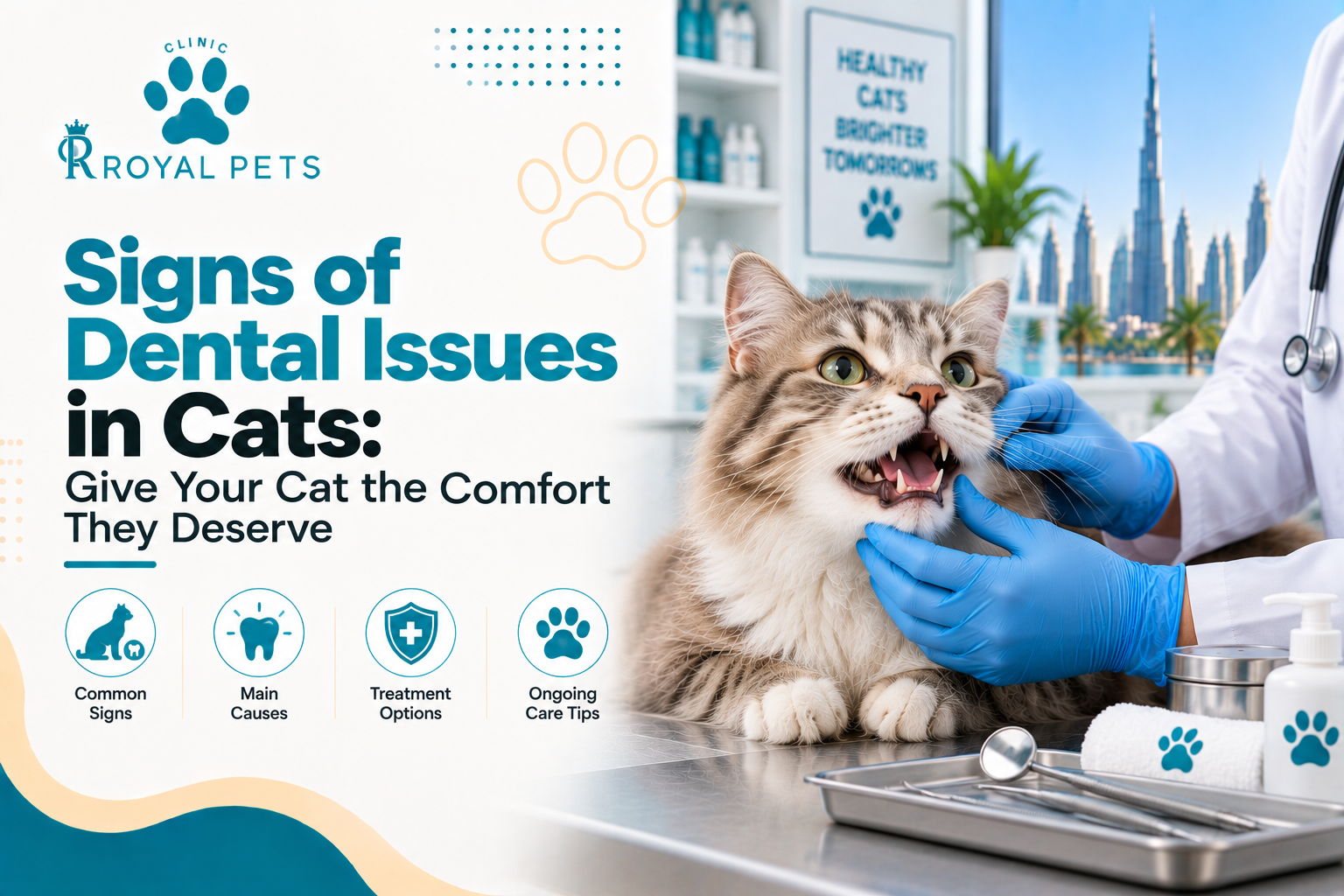
The signs of dental issues in cats can be easy to overlook. Persistent bad breath, a change in eating habits, or less time spent grooming may be your cat’s quiet way of showing discomfort. Even a cat that continues eating can have a painful dental problem.
Recognising these changes gives you an opportunity to help. At Royal Pets Veterinary Clinic Dubai, in the heart of Garhoud, compassionate care begins with listening to your concerns and assessing your cat’s individual needs.
You do not need to know exactly what is wrong before reaching out. If something seems different, a veterinary examination can help you understand the cause and take the next step toward your cat’s comfort.
What Are the Most Common Signs of Dental Issues in Cats?
Common signs include persistent bad breath, red or swollen gums, yellow or brown deposits on the teeth, drooling, difficulty chewing, and pawing at the mouth. Some cats also become less interested in food, lose weight, or stop grooming as thoroughly.
These symptoms do not identify a specific condition on their own. They are reasons to arrange an examination, especially when they are new, persistent, or becoming more noticeable.
Persistent Bad Breath
An occasional food smell is different from consistently unpleasant breath. Persistent bad breath, also called halitosis, can accompany plaque buildup, gum disease, or other oral problems.
Bad breath can also have causes beyond the mouth. Rather than trying to cover the smell with a product, contact Royal Pets Veterinary Clinic Dubai to have the underlying cause assessed.
Red, Swollen, or Bleeding Gums
Healthy-looking teeth do not necessarily mean healthy gums. A bright red line along the gumline, swelling, or bleeding may indicate inflammation.
You might notice these changes when your cat yawns or briefly opens their mouth. Avoid forcing the mouth open or repeatedly touching a sore area. Tell the veterinary team what you have observed so they can assess your cat gently.
Yellow or Brown Tartar Buildup
Yellow, brown, or dark crust-like deposits on teeth may be tartar. Visible deposits can accompany gum inflammation, but appearance alone cannot show how much disease is present beneath the gumline.
Do not attempt to scrape your cat’s teeth at home. A professional examination can establish whether cleaning or other treatment is appropriate.
Eating Changes That May Suggest Dental Pain
Your cat’s behaviour around food can reveal changes that are difficult to see inside the mouth.
Chewing on One Side or Dropping Food
A cat with oral discomfort may chew differently, tilt their head, or repeatedly drop pieces of food. Some approach their bowl eagerly but hesitate after trying to eat.
Watch for changes from your cat’s usual routine. A new chewing pattern deserves attention even if your cat eventually finishes the meal.
Refusing Dry Food or Preferring Softer Food
A sudden preference for wet food over dry kibble can be associated with discomfort when chewing. However, food preferences can change for other reasons, so this behaviour is not proof of dental disease.
If the change occurs alongside bad breath, drooling, or gum inflammation, arrange an assessment at Royal Pets Veterinary Clinic Dubai.
Reduced Appetite or Weight Loss
Eating less or losing weight should never be dismissed as simply getting older or becoming fussy. Dental pain is one possible cause, but other illnesses can produce similar changes.
If your cat stops eating, contact the clinic promptly for advice. Do not wait for weight loss or obvious mouth damage before seeking help.
Behavioural Signs of Dental Issues in Cats
Oral pain can affect more than mealtimes. You may notice changes in how your cat interacts, rests, or cares for their coat.
Excessive Drooling
New or excessive drooling can accompany oral irritation or pain. Saliva may appear clear, thick, or blood-tinged.
Drooling has several possible causes, including some that need urgent attention. Report when it began, whether there is blood, and any accompanying appetite or behaviour changes.
Pawing at the Mouth or Rubbing the Face
Repeatedly pawing at the mouth, shaking the head, or rubbing the face against furniture or the floor may indicate discomfort.
These behaviours can also occur with non-dental conditions. A veterinary examination helps distinguish the cause and guide appropriate care.
Pulling Away From Touch
A normally affectionate cat may suddenly resist having their chin, cheek, or jaw touched. They may pull away, become irritable, or avoid interaction.
Respect this change rather than repeatedly testing the painful area. Share it with the veterinary team—it can be a useful part of your cat’s history.
Reduced Grooming or Matted Fur
Cats use their mouths extensively when grooming. Oral discomfort may make this activity difficult, leaving the coat less tidy or allowing mats to develop.
Reduced grooming can also reflect other health problems. At Royal Pets Veterinary Clinic Dubai, an examination can consider both oral health and your cat’s wider wellbeing.
Physical Changes in Your Cat’s Mouth That Need Attention
Some warning signs are more visible, but they still require professional interpretation.
Loose, Broken, or Missing Adult Teeth
Adult teeth should not normally become loose or fall out. A broken tooth or unexpected tooth loss may indicate injury or disease.
Normal kitten tooth replacement is different from losing an adult tooth. If you are unsure which applies, contact the clinic rather than trying to remove or manipulate the tooth yourself.
Discoloured Teeth
A tooth that has changed colour may need assessment, particularly following an injury. Discolouration and surface deposits are not always the same problem.
Mention any recent accident or change in chewing when booking the examination.
Mouth Sores or Ulcers
Lesions on the gums, tongue, or inner cheeks can be painful and have several possible causes. They should not automatically be assumed to be ordinary gum disease.
Do not apply human mouth gels, mouthwash, or home remedies. Let the veterinary team assess the area and recommend suitable care.
Can Cats Have Dental Problems and Still Eat Normally?
Yes. Continued eating does not rule out dental disease or oral pain.
Some cats adapt their chewing or tolerate discomfort without showing dramatic changes. Others display only subtle signs, such as slower meals, less grooming, or avoiding touch around the face.
That is why oral health checks matter even when your cat appears well. You do not have to wait until your pet refuses food to discuss dental concerns with Royal Pets Veterinary Clinic Dubai.
Common Conditions Behind Feline Dental Symptoms
Similar symptoms can arise from different conditions. Identifying the cause is essential because the appropriate treatment may differ.
Gingivitis and Periodontal Disease
Gingivitis is inflammation of the gums. Periodontal disease affects the tissues supporting the teeth and can lead to more extensive damage.
Professional assessment helps determine the extent of the problem and whether cleaning, additional treatment, or ongoing monitoring is needed.
Tooth Resorption
Tooth resorption involves the breakdown of tooth structure and can be painful. Some affected areas are difficult to see during a casual look inside the mouth.
Your veterinarian may recommend further dental assessment or imaging to understand what is happening and plan treatment.
Stomatitis
Stomatitis involves inflammation of tissues within the mouth and may cause substantial discomfort, drooling, and difficulty eating.
It requires an individual treatment plan. Brushing or changing food alone should not be expected to resolve severe oral inflammation.
When Should You Contact Royal Pets Veterinary Clinic Dubai?
Arrange an appointment if you notice persistent bad breath, gum changes, tartar buildup, altered chewing, drooling, or reduced grooming.
Seek urgent veterinary advice if your cat cannot eat or drink, has significant facial swelling, substantial mouth bleeding, or appears severely distressed. Breathing difficulty requires immediate veterinary attention.
When contacting the clinic, explain:
- When you first noticed the symptoms.
- Whether your cat is eating and drinking.
- Any changes in weight, grooming, or behaviour.
- Whether there has been an injury.
- Any medication your cat currently takes.
These details help the team understand your concerns and advise on the next step.
How Royal Pets Veterinary Clinic Dubai Can Help
At Royal Pets Veterinary Clinic Dubai, your cat’s dental concerns are considered alongside their age, lifestyle, medical history, and overall health.
Dental services include oral examinations, professional cleaning and polishing, periodontal treatment, extractions when necessary, and pain management with post-treatment guidance.
The clinic also offers X-ray imaging, ultrasound, and an in-house laboratory for broader diagnostic needs. Your veterinarian will explain which assessments are relevant to your cat and whether additional dental investigations are needed.
The aim is to give you a clear understanding of the findings and a care plan suited to your pet. You can ask questions, discuss concerns, and learn how to support recovery and ongoing oral health.
Supporting Your Cat’s Dental Health at Home
Home care can support prevention, but it cannot replace treatment for established dental disease.
Ask Before Starting a Brushing Routine
If your cat has bleeding gums, mouth sores, or suspected pain, arrange an examination before brushing. Brushing a painful mouth may cause distress.
Once the veterinary team confirms that brushing is appropriate, introduce it gradually using a cat-appropriate toothbrush and toothpaste. Never use human toothpaste.
Choose Dental Products With Veterinary Guidance
Ask which products suit your cat’s health and temperament. Dental diets or other suitable products may support a care plan, but they do not replace an examination or necessary treatment.
Keep Oral Health Checks Part of Routine Care
The appropriate frequency of examinations and professional cleaning varies between cats. Follow the schedule recommended for your pet rather than assuming every cat needs the same treatment interval.
FAQs About Signs of Dental Issues in Cats
How Can I Tell if My Cat Has Tooth Pain?
Possible signs include dropping food, chewing differently, drooling, pawing at the mouth, or resisting touch around the face. Some cats show few obvious symptoms. An examination at Royal Pets Veterinary Clinic Dubai can help identify whether dental pain is involved.
Does Bad Breath Always Mean Dental Disease?
No. Persistent bad breath can accompany dental disease, but other health conditions may also cause it. A veterinary assessment helps identify the source rather than treating the smell alone.
Can My Cat Have Dental Disease if They Still Eat?
Yes. Cats may continue eating despite painful oral disease. Watch for subtle changes and include oral health checks in your cat’s routine veterinary care.
Can I Treat My Cat’s Dental Problems at Home?
Home care can support prevention, but painful teeth, established gum disease, and mouth lesions need professional assessment. Do not scrape teeth, remove loose teeth, or give human pain medication.
What Questions Should I Ask During the Appointment?
Ask what may be causing the symptoms, whether further testing is needed, which treatments are recommended, and how pain will be managed. You can also ask about costs, recovery, feeding advice, and when to resume home dental care.
Take the Next Step Toward Your Cat’s Comfort
Small changes can be meaningful. Noticing them and seeking advice is a caring step you can take today.
At Royal Pets Veterinary Clinic Dubai, in Garhoud, your concerns receive time and attention, with care tailored to your furry family member.
Contact Royal Pets Veterinary Clinic Dubai to arrange a dental examination. Help your cat return to comfortable meals, easier grooming, and the everyday moments you love sharing.