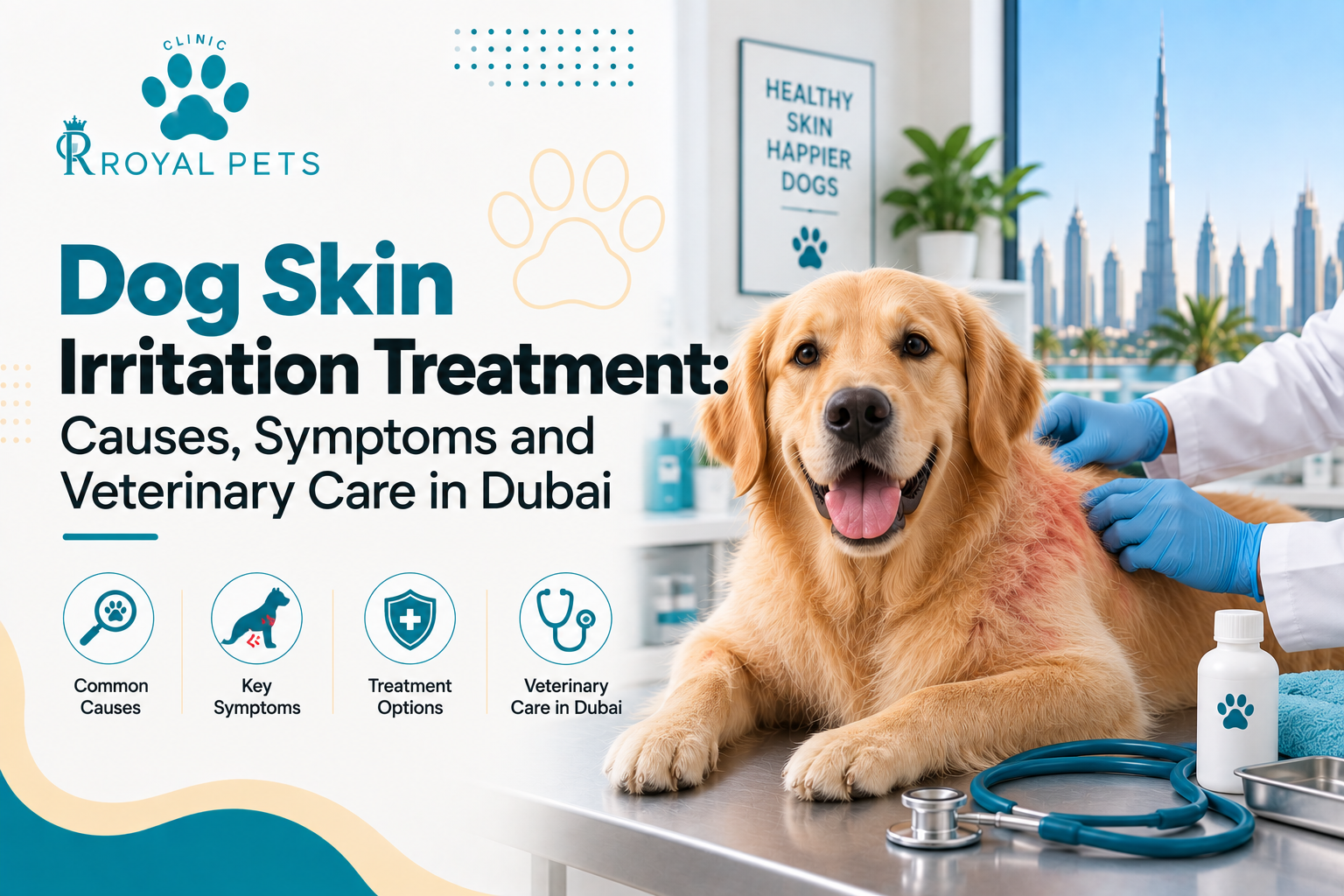
Seeing your dog constantly scratching, licking their paws, rubbing against furniture, or developing red and irritated skin can be worrying. Finding the right dog skin irritation treatment is not simply about stopping the itching for a few hours. Effective care starts by understanding why the irritation developed in the first place and choosing treatment that addresses the underlying cause.
Dog skin problems can be associated with allergies, parasites, bacterial or yeast infections, environmental irritants, grooming products, food sensitivities, and other health conditions. Because several skin problems can produce very similar symptoms, professional veterinary assessment can help prevent repeated flare-ups and unnecessary treatments.
If your dog is experiencing persistent itching, redness, hair loss, sores, or recurring skin problems, Royal Pets Veterinary Clinic Dubai provides comprehensive examinations, diagnostic services, and personalized veterinary care in Garhoud, Dubai.
What Is Dog Skin Irritation?
Dog skin irritation refers to inflammation or discomfort affecting the skin. It may appear suddenly or develop gradually over several weeks.
Some dogs experience mild itching for a short period, while others develop recurring problems that interfere with sleep, activity, and general comfort.
Common skin changes may include:
- Red or inflamed areas
- Constant scratching
- Paw licking or chewing
- Dry or flaky skin
- Hair loss
- Small bumps or rashes
- Scabs or crusts
- Unpleasant skin odor
- Hot spots
- Thickened or darker skin
- Repeated ear irritation
The appearance of the skin does not always reveal the exact cause. Two dogs with similar redness and scratching, for example, may need completely different treatment plans.
This is why successful dog skin irritation treatment begins with identifying the source of the problem rather than simply treating the visible symptoms.
What Causes Skin Irritation in Dogs?
There are many possible reasons your dog may suddenly become itchy or develop irritated skin.
Environmental Allergies
Dogs can react to substances present in their surroundings. Environmental allergens may contribute to itching around the paws, face, ears, abdomen, and other areas of the body.
Some dogs experience seasonal symptoms, while others may struggle with irritation throughout the year.
Repeated paw licking, scratching, and recurring ear problems can sometimes accompany environmental allergies.
Fleas, Ticks and Mites
Parasites are another important cause that should be considered when investigating itchy skin.
A dog does not necessarily need to have a large visible flea infestation to experience irritation. Some dogs can be particularly sensitive to flea bites.
Mites and other parasites can also produce itching, redness, crusting, or hair loss.
Appropriate veterinarian-approved parasite prevention is therefore an important part of both treatment and prevention.
Food-Related Allergies
Food reactions can sometimes contribute to chronic itching and skin inflammation.
However, simply changing food randomly does not reliably determine whether food is responsible.
When a veterinarian suspects a food allergy, a carefully controlled elimination or dietary trial may be recommended. The diet must usually be followed consistently so that the dog’s response can be properly evaluated.
Bacterial Skin Infections
Repeated scratching damages the skin’s protective barrier. Once the surface becomes irritated or broken, bacteria may multiply and create a secondary infection.
Signs can include increased redness, pustules, crusting, unpleasant odor, soreness, or discharge.
Treating the infection without identifying what caused the dog to scratch in the first place may result in the problem returning.
Yeast and Fungal Problems
Yeast can also contribute to inflamed and uncomfortable skin.
Affected dogs may experience itching, redness, greasy skin, odor, or recurring irritation in areas such as paws, ears, skin folds, and the abdomen.
Professional assessment can help distinguish yeast-related problems from other conditions that look similar.
Contact Irritation
Sometimes the problem is associated with something that has directly contacted the dog’s skin.
Potential irritants may include certain shampoos, grooming products, cleaning products, plants, or substances encountered outdoors.
Changes in grooming products or environment are therefore useful information to share during your dog’s veterinary examination.
Signs Your Dog May Need Skin Treatment
Occasional scratching is normal. Persistent or aggressive scratching is different.
Pay particular attention if your dog begins to:
- Scratch throughout the day or night
- Bite or chew specific areas repeatedly
- Lick their paws continuously
- Rub their face against furniture
- Develop bald patches
- Develop strong skin or ear odors
- Experience repeated ear problems
- Develop wet, painful hot spots
- Bleed from excessive scratching
- Show signs of pain when touched
When irritation starts affecting your dog’s comfort or normal behavior, waiting for the problem to disappear may allow inflammation or secondary infection to become worse.
A veterinary examination can help establish what is happening and determine the most appropriate next step.
How Is Dog Skin Irritation Diagnosed?
Because many dermatological conditions share similar symptoms, diagnosis may involve several steps.
At Royal Pets Veterinary Clinic Dubai, your dog’s evaluation can begin with a comprehensive examination tailored to their age, symptoms, lifestyle, medical history, and individual needs.
Medical History
Your veterinarian may ask when the itching began, whether it occurs seasonally, which areas are affected, what food your dog eats, which parasite prevention products are used, and whether previous treatments helped.
Details that seem small can sometimes provide useful clues.
Physical Examination
The skin, coat, paws, ears, and other affected areas can be carefully examined for signs of inflammation, parasites, infection, hair loss, lesions, or other abnormalities.
Diagnostic Testing
Depending on the symptoms, further diagnostic investigation may be recommended.
Royal Pets Veterinary Clinic Dubai offers advanced diagnostic capabilities including an in-house laboratory, X-ray, and ultrasound, allowing veterinarians to investigate health concerns when additional assessment is necessary.
For dermatological problems, the veterinary team determines which tests are appropriate based on each dog’s individual presentation.
What Is the Best Dog Skin Irritation Treatment?
There is no single treatment that works for every itchy dog.
The best dog skin irritation treatment depends on what is causing the inflammation.
A dog suffering from parasites needs a different approach from a dog experiencing a food reaction, bacterial infection, yeast problem, or environmental allergy.
Treatment may therefore include one or several approaches.
Medicated Shampoos and Topical Care
Veterinary-recommended shampoos, sprays, or other topical products may be used for certain skin conditions.
Depending on the diagnosis, these products can help support irritated skin or address bacterial, yeast, or inflammatory problems.
Avoid selecting medicated products purely because another pet owner used them successfully. A product appropriate for one skin condition may not be suitable for another.
Prescription Anti-Itch Treatment
When itching is severe, veterinarians may prescribe medications or injections designed to reduce inflammation and itching while the underlying cause is being investigated or treated.
The specific medication depends on the dog’s condition, medical history, age, severity of symptoms, and other factors.
Treatment for Secondary Infections
If testing or examination suggests bacterial or yeast infection, targeted treatment may be necessary.
Controlling an infection can reduce discomfort, but dogs with recurring infections may also need investigation into why their skin is repeatedly becoming vulnerable.
Parasite Control
Veterinarian-approved flea and tick prevention can be an important part of managing skin irritation.
Parasite prevention should generally be selected according to your dog’s age, weight, lifestyle, and health circumstances.
Dietary Trials
If food allergy is suspected, the veterinarian may recommend a controlled hypoallergenic or novel-protein diet trial.
Consistency is important. Feeding treats, table scraps, flavored supplements, or other foods during the trial can make it difficult to assess whether the diet is helping.
How Can You Soothe Your Dog’s Irritated Skin at Home?
Home care can sometimes make a dog more comfortable, but it should support veterinary treatment rather than replace diagnosis when symptoms are persistent.
Consider a Gentle Oatmeal Bath
A gentle, fragrance-free colloidal oatmeal dog shampoo may help soothe mildly irritated skin in some dogs.
However, dogs with infections, wounds, severe inflammation, or existing dermatological conditions may require a specific medicated shampoo instead.
Ask your veterinarian which bathing products and frequency are suitable for your dog.
Prevent Excessive Scratching and Licking
Repeated chewing and licking can transform a small irritated area into a painful hot spot.
A veterinary recovery collar or another appropriate protective method can sometimes prevent self-trauma while treatment begins.
Maintain Parasite Prevention
Regular veterinarian-approved flea and tick control can help reduce the risk of parasite-related irritation.
Even indoor dogs can require appropriate prevention depending on their lifestyle and exposure.
Ask About Omega-3 Supplements
Omega-3 fatty acids may be recommended as part of nutritional support for some dogs’ skin and coat.
Do not automatically add supplements to your dog’s diet, particularly if your pet already receives medication or has another health condition. Speak with your veterinarian first about whether supplementation is appropriate and how it should be used.
What Should You Avoid Putting on Your Dog’s Irritated Skin?
When your dog is uncomfortable, it can be tempting to reach for something from the bathroom cabinet.
That can create additional problems.
Avoid using human creams, steroid products, antibiotics, essential oils, strong antiseptics, or other medications without veterinary guidance.
Dogs can lick products from their skin, and ingredients considered acceptable for human use may not be appropriate for pets.
If you are unsure what is safe, contact Royal Pets Veterinary Clinic Dubai before applying a new product.
Why Does My Dog’s Skin Irritation Keep Coming Back?
Recurring irritation usually deserves closer investigation.
Repeated flare-ups may happen because:
- An underlying allergy remains uncontrolled
- Parasites continue to cause exposure
- A secondary infection has returned
- The environmental trigger remains present
- Treatment was discontinued too early
- A dietary trigger has not been identified
- The dog has a chronic dermatological condition
Managing chronic skin disease often requires follow-up rather than a one-time treatment.
Keeping photographs and notes about when symptoms appear can also help you discuss patterns with your veterinarian.
How Long Does Dog Skin Irritation Take to Heal?
Recovery time varies considerably.
Minor irritation caused by a temporary trigger may improve relatively quickly once that trigger is removed. Infections, allergies, parasites, or chronic skin disorders can require more extensive treatment and monitoring.
Healing can also take longer when a dog continues scratching or licking the affected area.
Instead of focusing only on how quickly the redness disappears, monitor whether scratching, licking, odor, lesions, and discomfort are genuinely improving.
When Should You Take Your Dog to a Vet?
Arrange veterinary care when skin irritation is persistent, recurrent, painful, or becoming worse.
Signs that deserve veterinary attention include:
- Severe or continuous itching
- Open wounds or bleeding
- Pus or unusual discharge
- Strong odor
- Rapidly spreading redness
- Significant hair loss
- Swelling
- Pain
- Repeated ear infections
- Loss of appetite or unusual tiredness
- Skin problems that repeatedly return
Facial swelling, breathing difficulty, collapse, or other signs of a severe allergic reaction require urgent veterinary attention.
Early assessment can also help prevent continuous scratching from creating more extensive skin damage.
How Can You Prevent Future Skin Irritation?
Although not every dermatological condition can be prevented, good routine care can reduce avoidable problems.
Maintain consistent veterinarian-recommended parasite prevention, use appropriate grooming products, keep skin folds clean and dry when applicable, monitor your dog’s paws after outdoor activity, and pay attention to changes in scratching or licking.
Regular veterinary examinations are particularly valuable for dogs with recurring skin problems because subtle changes can sometimes be identified before a major flare-up develops.
Dog Skin Irritation Treatment in Dubai
Living in Dubai means dogs may encounter heat, humidity, dust, sand, indoor air conditioning, grooming routines, and a variety of outdoor environments.
When your dog develops a skin problem, the goal should not simply be to find the fastest cream or shampoo. The goal is to understand what is making your pet uncomfortable and build a treatment plan around that cause.
Royal Pets Veterinary Clinic Dubai offers comprehensive veterinary care in the heart of Garhoud, Dubai, combining modern medical capabilities with a warm and gentle approach.
Pet owners have access to:
- Comprehensive examinations tailored to each pet
- Advanced X-ray and ultrasound diagnostics
- An in-house laboratory
- Preventive veterinary medicine
- Surgery
- Dental care
- Professional grooming
- Comfortable pet boarding
- A fully stocked pet shop
Having these services available in one welcoming environment helps support your pet’s health beyond the immediate skin problem.
FAQ About Dog Skin Irritation Treatment:
What is the best treatment for irritated skin on a dog?
The best treatment depends on the cause. Allergies, parasites, bacterial infections, yeast problems, and environmental irritation can all require different approaches. A veterinary examination helps determine which treatment is suitable.
What can I put on my dog’s irritated skin?
Avoid applying human creams or medications without veterinary advice. Depending on the cause, your veterinarian may recommend a gentle shampoo, medicated topical treatment, or another product specifically appropriate for your dog.
Why is my dog itching if I cannot see any fleas?
Fleas are only one possible cause of itching. Allergies, mites, bacterial or yeast infections, food-related reactions, contact irritation, and other conditions can also cause scratching.
Can food cause skin irritation in dogs?
Yes, food reactions can contribute to itching in some dogs. Veterinary-supervised elimination diets may be used when a food allergy is suspected.
What does a dog skin allergy look like?
Possible signs include itching, redness, paw licking, recurrent ear irritation, hair loss, and inflamed skin. These symptoms can also occur with other conditions, so appearance alone cannot confirm an allergy.
Can I use oatmeal shampoo for my dog’s itchy skin?
A fragrance-free colloidal oatmeal dog shampoo may soothe mild irritation in some dogs, but it will not treat every cause. Dogs with infections or other skin diseases may need different products.
Is dog skin irritation contagious?
Some causes are not contagious, while certain parasites or infectious skin conditions can potentially spread. A veterinary examination is necessary to determine the specific cause.
Why does my dog’s skin irritation keep returning?
Recurring problems may be associated with allergies, ongoing parasite exposure, repeated infection, environmental triggers, or another underlying condition. Repeated flare-ups are a good reason to arrange further veterinary assessment.
How long does irritated dog skin take to heal?
There is no universal recovery time. Healing depends on the cause, severity, presence of infection, treatment, and whether scratching or licking continues.
When should I contact a veterinarian about my dog’s itchy skin?
Contact a veterinarian when itching persists, becomes severe, produces sores or hair loss, is associated with odor or discharge, or repeatedly returns.
Give Your Dog the Comfort They Deserve
Your dog cannot tell you whether their skin is burning, itching, or painful. Persistent scratching, licking, redness, and hair loss are their way of showing that something is wrong.
Rather than repeatedly experimenting with shampoos, foods, creams, or home remedies, finding the underlying cause can put your dog on a clearer path toward relief.
At Royal Pets Veterinary Clinic Dubai, every pet is treated like royalty—with time, attention, compassion, and veterinary care tailored to their individual needs. The welcoming team in Garhoud understands that pets are family and works to make every visit as comfortable and stress-free as possible.
If your dog is experiencing persistent itching, redness, paw licking, hair loss, hot spots, or recurring skin problems, contact Royal Pets Veterinary Clinic Dubai to schedule an examination.
The right dog skin irritation treatment starts with understanding the cause. Give your pet the opportunity to feel comfortable in their skin again with attentive, professional veterinary care.