Bringing a dog into your family means welcoming years of companionship, affection, and unforgettable moments. It also means taking responsibility for your dog’s health and protecting them from diseases that may cause serious complications.
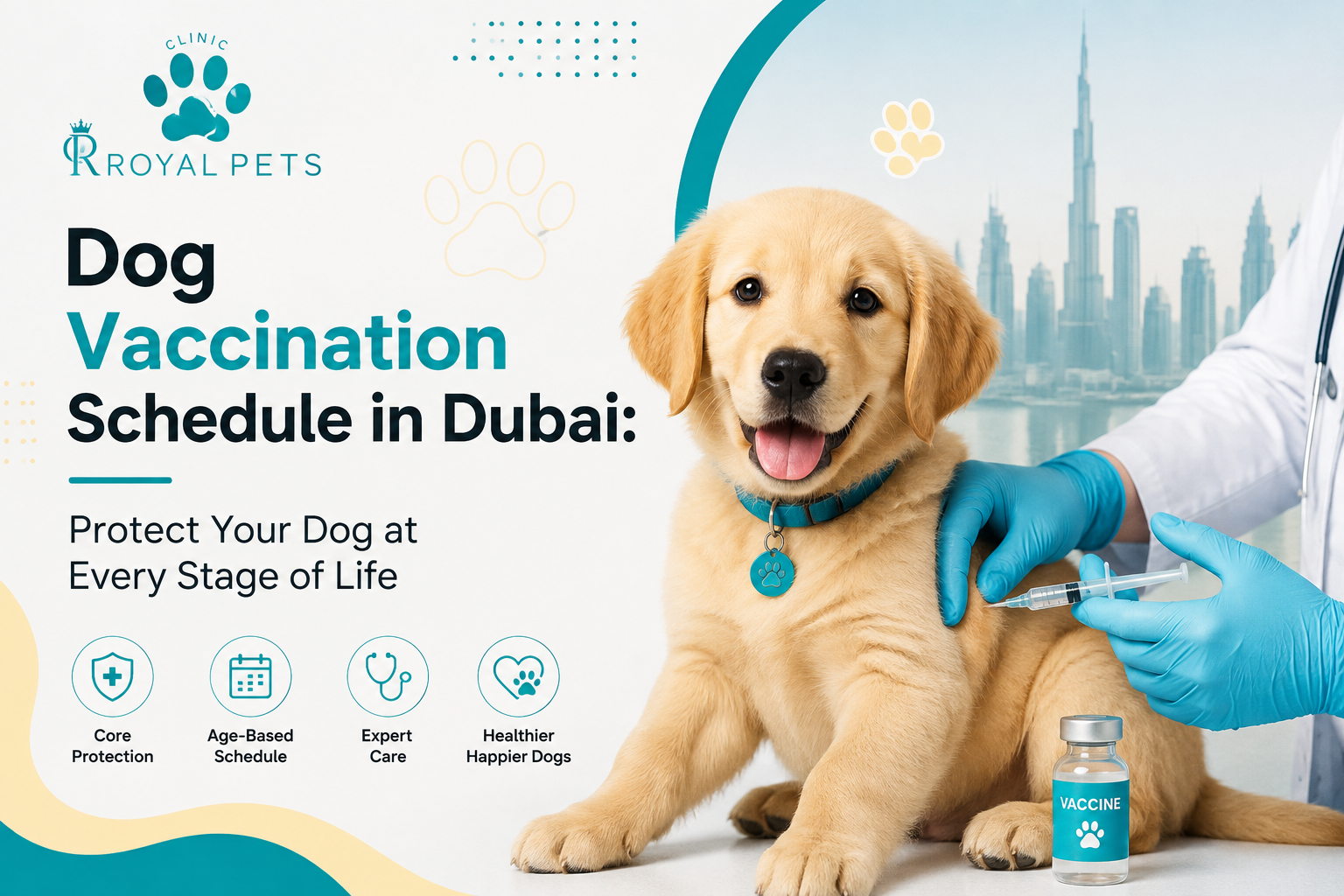
Following the right Dog Vaccination Schedule is one of the most important steps you can take to keep your puppy or adult dog healthy. Vaccines help prepare your dog’s immune system to fight dangerous infections before exposure occurs.
However, every dog is different. Age, previous vaccination records, lifestyle, health condition, boarding plans, and travel requirements can all affect the vaccines your dog may need.
At Royal Pets Veterinary Clinic Dubai, every vaccination plan is tailored to your dog’s individual needs. The veterinary team carefully examines your pet, reviews their medical history, and recommends the most suitable vaccination schedule.
Why Is Dog Vaccination Important?
Dogs can become exposed to infectious diseases in many places, including parks, grooming centres, boarding facilities, training classes, and areas visited by other animals.
Some diseases can spread through direct contact with an infected dog, while others may remain in the environment and affect unprotected pets. Puppies are especially vulnerable because their immune systems are still developing.
Vaccinating your dog can help protect against serious diseases such as:
- Canine distemper
- Canine parvovirus
- Infectious canine hepatitis
- Rabies
- Leptospirosis
- Kennel cough
- Canine parainfluenza
Vaccination does more than protect one pet. It also helps reduce the spread of infectious diseases among dogs in the wider community.
A vaccination appointment is also an opportunity for your veterinarian to assess your dog’s general health, weight, behaviour, development, and lifestyle risks.
Standard Puppy Dog Vaccination Schedule
A typical Dog Vaccination Schedule begins when a puppy is approximately six to eight weeks old. Puppies usually require several doses because antibodies received from their mother can sometimes interfere with early vaccinations.
For this reason, one vaccination is not usually enough to provide complete protection.
The following schedule provides a general overview of the vaccinations that may be recommended during puppyhood.
Puppy Vaccination Timeline from 6 to 16 Weeks
6 to 8 Weeks: First Puppy Vaccination
The first puppy vaccination commonly takes place between six and eight weeks of age.
At this stage, the puppy may receive the first dose of the DHPP vaccine. DHPP is a combination vaccine that helps protect against:
- Distemper
- Hepatitis
- Parvovirus
- Parainfluenza
Bordetella vaccination may also be discussed if the puppy is expected to attend boarding, daycare, grooming appointments, or social environments with other dogs.
Before administering any vaccine, the veterinarian should examine the puppy to make sure they are healthy enough to be vaccinated.
10 to 12 Weeks: Second Vaccination Visit
The second vaccination appointment usually takes place between ten and twelve weeks of age.
During this visit, the puppy may receive the second dose of the DHPP vaccine. Depending on the puppy’s lifestyle and risk of exposure, the veterinarian may also recommend the first dose of Leptospirosis vaccination or another lifestyle-based vaccine.
This visit is also a good opportunity to discuss:
- Safe puppy socialisation
- Parasite prevention
- Feeding and nutrition
- Grooming
- Microchipping
- Future boarding plans
- Travel requirements
Keeping all vaccination records organised from the first appointment can make future veterinary visits, registration, boarding, and travel much easier.
14 to 16 Weeks: Final Puppy Booster
Between fourteen and sixteen weeks of age, the puppy may receive the final booster dose in the early DHPP vaccination series.
The first Rabies vaccine may also be administered during this stage, depending on the puppy’s age, health, vaccination history, and current local requirements.
The final puppy vaccination should not be scheduled too early. Maternal antibodies may reduce the effectiveness of early vaccines, which is why several doses are administered during the first months of life.
Your veterinarian will confirm when the puppy’s primary vaccination course has been completed and when it is safer to visit public areas.
Adult Dog Booster Schedule
Vaccination does not stop after puppyhood. Adult dogs also need regular health assessments and booster vaccinations to maintain appropriate protection.
12 to 15 Months
A booster appointment is commonly recommended approximately one year after the initial puppy vaccination course.
During this visit, the veterinarian may review or update:
- DHPP vaccination
- Rabies vaccination
- Leptospirosis vaccination
- Bordetella vaccination
- Other lifestyle-based vaccines
The exact schedule depends on the vaccines previously administered and the dog’s individual health and lifestyle.
Every 1 to 3 Years
Some core vaccinations, including DHPP and Rabies, may be repeated every one to three years.
The correct interval depends on:
- The specific vaccine used
- The vaccine label
- Previous vaccination history
- Local regulations
- Travel requirements
- The veterinarian’s recommendation
Dog owners should not assume that every vaccine follows the same booster schedule.
Annual Lifestyle Vaccines
Certain non-core or lifestyle vaccines may require yearly updates.
These may include:
- Leptospirosis
- Bordetella
- Canine influenza
A dog that regularly stays in boarding facilities, attends daycare, visits grooming centres, travels, or spends time around other dogs may have different vaccination needs from a dog that stays mainly at home.
At Royal Pets Veterinary Clinic Dubai, the veterinary team can assess your dog’s daily routine and recommend vaccines based on actual exposure risks.
What Does the DHPP Vaccine Protect Against?
The DHPP vaccine is one of the most commonly discussed vaccines in a puppy vaccination schedule.
Each letter refers to a disease or group of diseases.
Canine Distemper
Canine distemper is a serious viral disease that can affect the respiratory, digestive, and nervous systems.
It can cause symptoms such as fever, coughing, nasal discharge, vomiting, diarrhoea, weakness, and neurological problems.
Young puppies and unvaccinated dogs may face a greater risk of severe illness.
Infectious Canine Hepatitis
Infectious canine hepatitis is associated with canine adenovirus and can affect several organs, including the liver.
Vaccination helps reduce the risk of severe disease and its complications.
Canine Parvovirus
Canine parvovirus is particularly dangerous for puppies. It may cause severe vomiting, diarrhoea, dehydration, loss of appetite, and weakness.
The virus can also survive in contaminated environments, making vaccination especially important before puppies begin visiting high-risk public areas.
Canine Parainfluenza
Canine parainfluenza is associated with respiratory illness and may contribute to kennel cough.
Dogs that spend time around other dogs may have a greater risk of exposure.
Rabies Vaccination for Dogs in Dubai
Rabies is a serious disease that affects the nervous system and can be transmitted between animals and humans.
Rabies vaccination is an important part of responsible pet ownership. It may also be needed for pet registration, boarding, and international travel.
The first Rabies vaccination is commonly administered during the later stages of the puppy vaccination schedule. Booster timing depends on the vaccine product, the dog’s records, local regulations, and travel plans.
Owners should keep the Rabies vaccination certificate and make sure the dog’s identifying information is accurate.
The veterinary team at Royal Pets Veterinary Clinic Dubai can review your dog’s records and explain when the next Rabies booster should be scheduled.
Lifestyle Vaccines for Dogs
Core vaccines are generally recommended because they protect against serious and widespread diseases. Lifestyle vaccines are recommended according to the dog’s individual exposure risks.
Not every dog needs every available vaccine.
Leptospirosis Vaccination
Leptospirosis is a bacterial disease that can spread through contact with contaminated water, soil, or urine from infected animals.
It may affect the kidneys, liver, and other organs. It can also be transmitted to humans.
Dogs that spend time outdoors or may encounter contaminated environments can have a higher risk of exposure.
The Leptospirosis vaccine commonly requires an initial course followed by regular boosters when continued protection is recommended.
Bordetella Vaccination
Bordetella is one of the organisms associated with kennel cough.
The vaccine may be recommended for dogs that:
- Stay in boarding facilities
- Attend dog daycare
- Visit grooming centres
- Participate in group training
- Frequently interact with other dogs
Some boarding facilities require proof of current Bordetella vaccination before accepting a dog.
Because Royal Pets Veterinary Clinic Dubai provides comfortable pet boarding, the veterinary team can help owners understand the vaccinations and records needed before their dog’s stay.
Canine Influenza Vaccination
Canine influenza is a contagious respiratory infection.
Vaccination may be considered for dogs with a higher risk of exposure, especially those that frequently spend time in environments with several other dogs.
Your veterinarian can determine whether this vaccine is relevant to your dog’s lifestyle.
When Can a Puppy Go Outside After Vaccination?
Many new puppy owners want to know when it is safe to begin outdoor walks and social activities.
The answer does not depend only on the number of injections received. It also depends on:
- The puppy’s age
- The timing of the final vaccination
- The puppy’s health
- Disease risk in the local environment
- The veterinarian’s advice
After the first vaccine, a puppy may not yet have complete protection.
However, socialisation is also an important part of a puppy’s behavioural development. Your veterinarian may recommend safe, controlled ways to introduce your puppy to new sounds, people, surfaces, and healthy vaccinated dogs.
Until the puppy’s vaccination course is complete, it may be sensible to avoid:
- Dog parks
- Areas with unknown dogs
- Places with animal waste
- Shared water bowls
- Heavily used public dog areas
- Contact with dogs that have unknown vaccination histories
The veterinary team at Royal Pets Veterinary Clinic Dubai can advise you about safe socialisation based on your puppy’s vaccination progress.
What If Your Dog Missed a Vaccination?
A missed vaccine does not always mean that the entire vaccination course must be restarted.
The correct next step depends on:
- Which vaccine was missed
- How much time has passed
- The dog’s age
- Previous vaccination records
- The vaccine product
- Boarding or travel requirements
Contact Royal Pets Veterinary Clinic Dubai if:
- Your puppy missed a scheduled vaccination
- Your adult dog has an overdue booster
- You adopted a dog without reliable records
- The vaccination booklet was lost
- You are unsure which vaccine was previously administered
- You need updated records for boarding
- You are planning to travel with your dog
The veterinary team can review the available information and create an appropriate catch-up schedule.
It is better to ask for professional guidance than to guess which injection your dog needs.
Vaccination for Adopted Dogs with Unknown Records
Rescue and adopted dogs may arrive without complete vaccination records.
When the history is unknown, the veterinarian may recommend treating the dog as unvaccinated or incompletely vaccinated.
The first appointment may include:
- A full physical examination
- A microchip check
- Review of any available documents
- Core vaccination planning
- Lifestyle risk assessment
- Parasite prevention advice
- Discussion of boarding or travel needs
At Royal Pets Veterinary Clinic Dubai, every adopted pet can receive an individual health and vaccination plan based on their age, condition, and lifestyle.
What to Expect During a Vaccination Appointment
A responsible vaccination appointment should include more than administering an injection.
Before vaccination, the veterinarian may ask about:
- Appetite
- Energy levels
- Vomiting or diarrhoea
- Coughing or sneezing
- Current medication
- Previous medical conditions
- Past vaccine reactions
- Recent travel
- Contact with other animals
The veterinarian may also examine your dog’s:
- Heart and breathing
- Eyes and ears
- Mouth and teeth
- Skin and coat
- Abdomen
- Temperature
- General body condition
If the dog is unwell, the veterinarian may recommend postponing vaccination until it is safe to proceed.
Dog Vaccination Side Effects
Most dogs experience no serious problems after vaccination.
Some dogs may have mild and temporary effects, including:
- Tiredness
- Reduced appetite
- Tenderness at the injection site
- Mild swelling
- Temporary discomfort
- Slightly reduced activity
Allow your dog to rest after the appointment and make sure fresh water is available.
Avoid intense exercise immediately after vaccination and follow the aftercare instructions provided by the veterinary team.
Do not give your dog human painkillers or other medication unless a veterinarian specifically recommends it.
When Should You Contact the Veterinarian?
Contact the veterinary team if your dog’s symptoms are persistent, worsening, or causing concern.
Urgent veterinary attention may be needed if your dog develops:
- Facial swelling
- Difficulty breathing
- Collapse
- Repeated vomiting
- Severe weakness
- Seizures
- Rapidly worsening symptoms
Always inform the veterinarian if your dog has previously experienced a reaction after vaccination. This information can help the veterinary team plan future appointments more carefully.
Keep Your Dog’s Vaccination Records Organised
A clear vaccination record is important for routine care, boarding, daycare, registration, and travel.
The record should include:
- Your dog’s name
- Date of birth
- Breed
- Microchip number
- Vaccine name
- Date administered
- Vaccine batch information
- Next due date
- Veterinarian’s details
- Clinic stamp or signature when required
Keep the original record in a safe place and consider saving a digital copy on your phone or computer.
Before boarding or travelling, check your dog’s records early. Some vaccines may need to be administered a specific number of days before entry or travel.
A Complete Veterinary Clinic in the Heart of Garhoud
Choosing the right veterinary clinic is about more than finding a place for vaccinations.
Pet owners need a team that listens carefully, treats animals gently, and provides reliable support throughout every stage of a pet’s life.
Royal Pets Veterinary Clinic Dubai is a warm and friendly veterinary clinic located in the heart of Garhoud.
The clinic is more than a medical space. It is a welcoming community for pet lovers who want high-quality and compassionate care for their furry family members.
Comprehensive Pet Examinations
Every pet has different needs.
A young puppy may need vaccination planning, nutrition advice, microchipping, and preventive care. An adult dog may need booster reviews, dental care, diagnostics, or ongoing health monitoring.
At Royal Pets Veterinary Clinic Dubai, comprehensive examinations are tailored to the pet’s age, medical history, and lifestyle.
Why Choose Royal Pets Veterinary Clinic Dubai?
Trust is one of the most important parts of the relationship between a pet owner and a veterinary team.
At Royal Pets Veterinary Clinic Dubai, the goal is to provide modern, high-quality veterinary care with a gentle and compassionate touch.
Every visit is designed to help pets feel relaxed, safe, and well cared for.
Pet owners can benefit from:
- Personalised veterinary attention
- Preventive healthcare planning
- Comprehensive examinations
- Advanced diagnostic services
- Vaccination advice
- Surgery and dental care
- Professional grooming
- Comfortable boarding
- A fully stocked pet shop
- A convenient location in Garhoud
Most importantly, every pet is treated like royalty, with time, attention, patience, and genuine care.
FAQ About the Dog Vaccination Schedule:
When should a puppy receive its first vaccination?
A puppy commonly receives the first vaccination between six and eight weeks of age. The exact timing depends on the puppy’s health, previous records, and the veterinarian’s recommendation.
How many vaccinations does a puppy need?
Most puppies need several vaccine doses between six and sixteen weeks of age. The exact number depends on when the vaccination course begins and the intervals selected by the veterinarian.
Is one puppy vaccination enough?
One early vaccination may not provide complete protection because maternal antibodies can affect the puppy’s immune response. Several doses are usually needed.
Does an adult dog need vaccinations every year?
Some lifestyle vaccines may require annual boosters, while certain core vaccines may be repeated every one to three years. The correct schedule depends on the vaccine, local requirements, and the dog’s health and lifestyle.
Does my dog need a Bordetella vaccine before boarding?
Many boarding facilities require current Bordetella or kennel cough vaccination. Contact the veterinary team before the planned boarding date to confirm the requirements.
What should I do if my dog’s vaccination record is missing?
Contact Royal Pets Veterinary Clinic Dubai for a veterinary examination and vaccination review. The team can recommend a catch-up schedule based on the dog’s age, health, and available information.
Can my puppy go outside after the first vaccination?
The first vaccination may not provide complete protection. Ask the veterinary team when your puppy can safely visit public areas and how to provide controlled socialisation during the vaccination period.
Is it normal for a dog to feel tired after vaccination?
Mild tiredness can occur after vaccination and is often temporary. Contact the veterinary team if the symptoms are severe, persistent, or accompanied by swelling, breathing difficulty, vomiting, collapse, or significant weakness.
Protect Your Dog with a Personalised Vaccination Plan
Your dog depends on you to make important decisions about their health.
Following the correct Dog Vaccination Schedule can help protect your pet from preventable diseases while preparing them for socialisation, grooming, boarding, and travel.
Do not wait until a vaccination expires or an upcoming trip reveals that your dog’s records are incomplete.
Contact Royal Pets Veterinary Clinic Dubai to arrange a vaccination review or comprehensive health examination. Bring any available vaccination records and speak with the veterinary team about your dog’s age, health, lifestyle, and future plans.
At Royal Pets Veterinary Clinic Dubai, every pet is treated like royalty, with gentle care, genuine attention, and the time they deserve.
This article provides general educational information. Vaccination requirements and schedules should always be confirmed by a qualified veterinarian after examining the individual dog.