
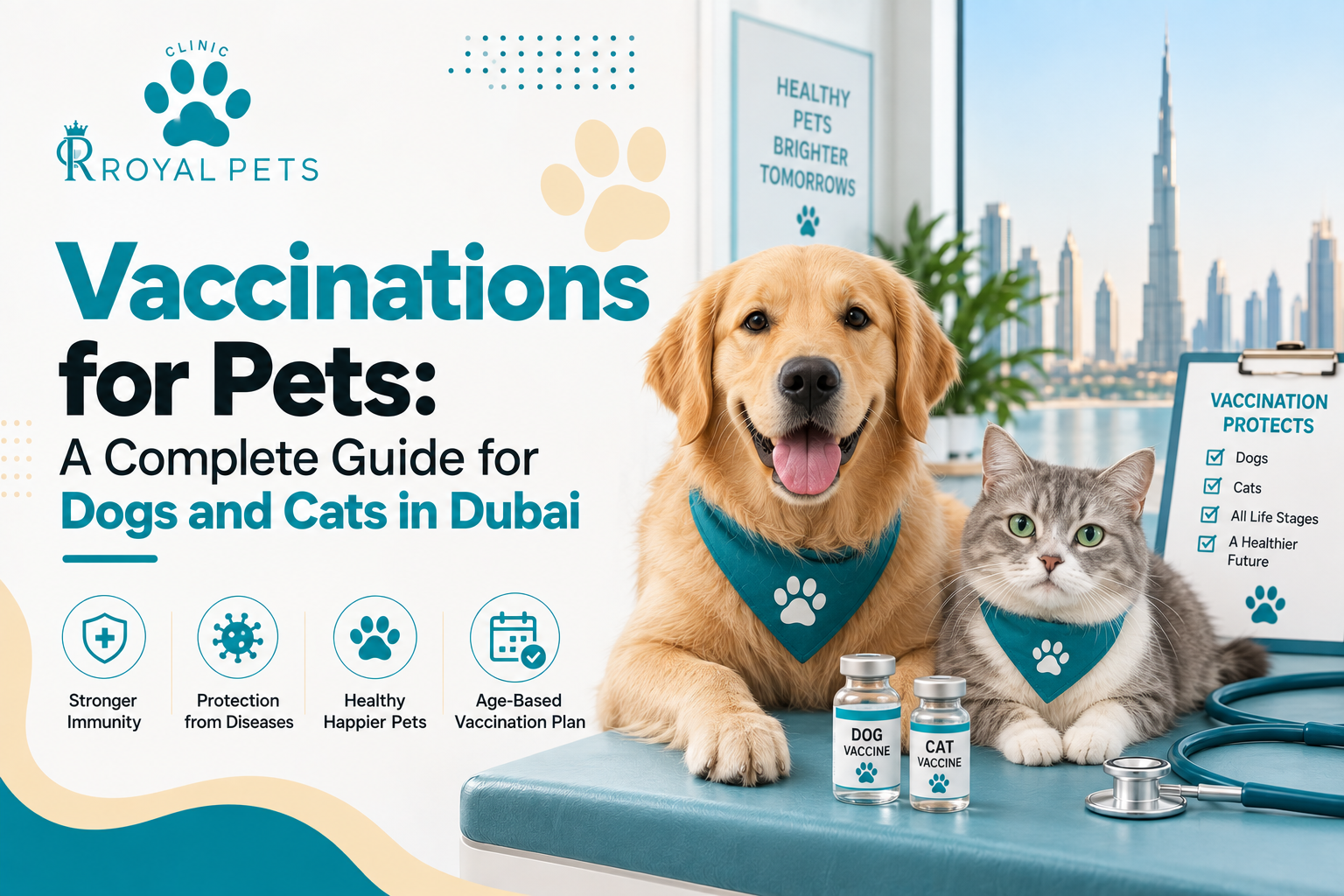
Vaccinations for Pets are one of the most important steps you can take to protect your dog or cat from serious, highly contagious, and potentially life-threatening diseases. A well-planned vaccination schedule helps support your pet’s long-term health while reducing the risk of preventable infections.
Whether you have recently welcomed a puppy or kitten into your home, adopted an adult pet, or simply want to make sure your companion remains properly protected, understanding which vaccines are recommended and when boosters may be needed is essential.
At Royal Pets Veterinary Clinic Dubai, pet owners can receive personalized veterinary guidance based on their pet’s age, lifestyle, vaccination history, health condition, and individual risk factors.
Why Are Vaccinations for Pets Important?
Vaccines work by helping your pet’s immune system recognize and respond to specific infectious diseases. Instead of waiting until a dog or cat becomes seriously ill, vaccination provides preventive protection before exposure occurs.
Regular Vaccinations for Pets can help protect against diseases that may spread rapidly between animals and, in some cases, may cause severe complications or death.
Vaccination can be particularly important for pets that:
- Spend time outdoors.
- Visit boarding or grooming facilities.
- Interact with other dogs or cats.
- Travel internationally.
- Attend daycare facilities.
- Have unknown vaccination histories.
- Are puppies or kittens building their early immunity.
However, vaccination is not simply about giving every pet the same injections at the same time. A veterinarian should evaluate the pet’s health, previous vaccinations, age, lifestyle, and potential exposure before recommending the most appropriate schedule.
What Vaccinations Do Dogs Need?
Dogs may receive a combination of core vaccines and additional lifestyle-based vaccines depending on their individual circumstances.
Core Dog Vaccines:
Some of the most widely used core vaccines for dogs protect against serious infectious diseases.
A common combination vaccine may include protection against:
Canine Distemper:
Canine distemper is a highly contagious viral disease that can affect the respiratory, digestive, and nervous systems. Young puppies and unvaccinated dogs may be particularly vulnerable.
Canine Adenovirus:
Vaccination can help protect dogs against diseases associated with canine adenovirus, including infectious canine hepatitis.
Canine Parvovirus:
Parvovirus is a highly contagious disease that can cause severe vomiting, diarrhea, dehydration, and potentially life-threatening illness, especially in puppies.
Canine Parainfluenza:
Parainfluenza is one of several infectious agents associated with respiratory disease in dogs. Protection may be included in combination vaccination protocols.
Leptospirosis:
Leptospirosis is caused by bacteria and may affect several organs, particularly the kidneys and liver. The veterinarian can determine whether leptospirosis vaccination should form part of your dog’s preventive healthcare plan.
Rabies Vaccination for Dogs:
Rabies is a fatal viral disease affecting the nervous system and can also pose a serious public-health risk.
Keeping rabies vaccination current is particularly important for pet ownership, registration, travel, and compliance with applicable veterinary requirements.
A veterinarian at Royal Pets Veterinary Clinic Dubai can review your dog’s vaccination records and determine when rabies vaccination or a booster may be appropriate.
What Vaccinations Do Cats Need?
Cats also require protection against several important infectious diseases.
Even cats that primarily live indoors may still require vaccination because disease exposure can occur in ways owners may not always anticipate.
FVRCP Vaccine for Cats
FVRCP is a combination vaccine commonly used to protect cats against several important feline diseases.
It generally provides protection against:
Feline Viral Rhinotracheitis
This disease is associated with feline herpesvirus and can cause respiratory symptoms such as sneezing, nasal discharge, and eye problems.
Feline Calicivirus
Calicivirus is another infectious disease affecting cats and may cause respiratory symptoms, oral ulcers, fever, and other complications.
Feline Panleukopenia
Feline panleukopenia is a highly contagious viral illness that can cause severe disease, especially in kittens and unvaccinated cats.
Rabies Vaccination for Cats
Rabies vaccination is also an important part of preventive healthcare for cats and may be required for registration or international travel depending on applicable regulations.
Your veterinarian can determine the appropriate vaccination timing based on your cat’s age and existing medical records.
Core and Non-Core Vaccinations for Pets
Not every vaccine is automatically appropriate for every animal.
Veterinarians commonly divide Vaccinations for Pets into core and non-core vaccines.
Core Vaccines
Core vaccines protect against diseases that pose significant risks to animals or public health. These vaccines are generally recommended for most pets, although the exact schedule still depends on factors such as age, previous vaccination history, and health condition.
Non-Core Vaccines
Non-core vaccines may be recommended according to lifestyle and exposure risk.
For example, additional protection may be considered for pets that frequently:
- Stay at boarding facilities.
- Attend daycare.
- Travel.
- Socialize with many animals.
- Spend significant time outdoors.
- Live in environments where certain diseases are more prevalent.
This is why personalized veterinary care matters. Two dogs of the same age may still require slightly different preventive plans depending on how they live.
Vaccination Schedule for Puppies and Kittens
Early vaccination is particularly important because puppies and kittens are still developing their immune defenses.
When Should Puppies and Kittens Start Vaccinations?
Initial core vaccinations commonly begin when puppies and kittens are approximately 6 to 8 weeks old, depending on the pet’s health, vaccination history, and veterinary recommendation.
Young pets often require a series of vaccinations rather than a single injection.
Booster doses may generally be administered at intervals of approximately 3 to 4 weeks during the early vaccination series, continuing until the veterinarian determines that the initial schedule has been completed.
The exact timing should always be decided by the veterinarian rather than following a generic schedule without professional assessment.
Why Are Multiple Puppy and Kitten Vaccines Needed?
Young animals may still carry maternal antibodies received from their mothers. These antibodies provide temporary protection but can sometimes interfere with vaccination responses.
A series of vaccinations helps increase the likelihood that the pet develops effective immunity as maternal protection gradually declines.
Missing doses or extending intervals significantly may affect the vaccination plan, which is why staying consistent with scheduled appointments is important.
Vaccinations for Adult Dogs and Cats
Vaccination does not necessarily end once puppyhood or kittenhood is over.
Adult dogs and cats may require periodic booster vaccinations to maintain appropriate protection.
Some vaccines may require more frequent boosters than others, and vaccination intervals may vary depending on:
- The specific vaccine.
- Previous vaccination dates.
- Manufacturer recommendations.
- The pet’s age.
- Lifestyle and exposure risk.
- Travel requirements.
- Existing health conditions.
Rather than assuming that every vaccine must automatically be repeated on exactly the same schedule, arrange a veterinary examination so the vaccination history can be reviewed properly.
What If You Do Not Know Your Pet’s Vaccination History?
This is common with rescued, adopted, or previously owned pets.
If vaccination records are unavailable, avoid guessing when or which vaccines were previously given.
Instead, bring the pet to Royal Pets Veterinary Clinic Dubai for an examination.
The veterinary team can review available information, assess the pet’s health and age, and recommend an appropriate vaccination plan.
Starting or restarting a vaccination schedule may sometimes be recommended depending on the circumstances.
Do Indoor Pets Still Need Vaccinations?
Many owners assume that pets living completely indoors do not require vaccines.
However, indoor living does not necessarily eliminate every disease risk.
A cat or dog may still encounter infectious agents through:
- Veterinary visits.
- Grooming appointments.
- Boarding.
- Contact with visiting pets.
- Unexpected outdoor escapes.
- Travel.
- New pets entering the household.
Some vaccines may also be important because of registration or travel requirements rather than everyday outdoor exposure alone.
The safest approach is to discuss your pet’s actual lifestyle with your veterinarian rather than stopping vaccination without professional advice.
What Happens During a Pet Vaccination Appointment?
At Royal Pets Veterinary Clinic Dubai, vaccination should be considered part of a broader preventive healthcare visit rather than simply an injection.
The veterinary team can first review your pet’s medical and vaccination history.
A physical examination may then be performed to evaluate the animal’s general condition and determine whether vaccination is appropriate that day.
Your veterinarian may consider factors such as:
- Age.
- Weight.
- Body condition.
- Previous vaccine reactions.
- Current medications.
- Existing illnesses.
- Travel plans.
- Boarding arrangements.
- Contact with other animals.
After determining the appropriate vaccines, the veterinary team can administer them and update your pet’s records.
Future booster appointments can also be discussed so you know when your pet should return.
Can a Sick Pet Be Vaccinated?
If your pet appears unwell, vaccination may sometimes need to be delayed until the animal has been examined.
Symptoms such as vomiting, diarrhea, severe lethargy, fever, coughing, loss of appetite, or another noticeable change should be discussed with a veterinarian.
The veterinarian can determine whether vaccination should proceed or whether another health problem should be addressed first.
Never hide symptoms simply because you want the vaccination completed on a particular date.
Possible Side Effects After Pet Vaccination
Most pets tolerate vaccinations well, but mild short-term reactions can occur.
After vaccination, some dogs or cats may experience temporary:
- Tiredness.
- Reduced activity.
- Mild soreness around the injection site.
- Slightly reduced appetite.
These signs are usually monitored and should improve.
However, unusual or severe symptoms require veterinary attention.
Contact a veterinary professional promptly if you notice signs such as significant swelling, breathing difficulties, repeated vomiting, collapse, severe weakness, or any rapidly worsening reaction.
If your pet has experienced a vaccine reaction in the past, inform the veterinary team before future vaccinations.
What Happens If Your Pet Misses a Booster?
Missing a scheduled vaccination does not mean you should simply wait until the next year.
The correct next step depends on:
- Which vaccine was missed.
- How late the booster is.
- Your pet’s age.
- Previous vaccination history.
- Travel or registration requirements.
- Exposure risk.
Contact Royal Pets Veterinary Clinic Dubai and provide any vaccination records you have.
The veterinary team can advise whether a booster can simply be administered or whether an adjusted schedule may be recommended.
Vaccinations Before Boarding or Grooming
Boarding, daycare, grooming, and other shared pet environments can increase opportunities for contact between animals.
Some facilities may therefore request evidence of current vaccination before accepting a pet.
Requirements can differ from one facility to another, so owners should confirm them in advance.
If your pet is preparing for boarding or another service, avoid leaving vaccination until the last minute.
Plan ahead and ask your veterinarian whether additional preventive measures should be considered.
Royal Pets Veterinary Clinic also provides comfortable pet boarding alongside preventive veterinary services, helping pet owners access multiple aspects of their pet’s care in one trusted environment.
Pet Vaccinations Before Travel
International travel with a pet may involve specific vaccination and documentation requirements.
Rabies vaccination is particularly important for many international travel procedures, while other requirements may include:
- Microchipping.
- Vaccination certificates.
- Health examinations.
- Veterinary documentation.
- Travel certificates.
- Destination-specific tests or treatments.
Requirements vary by country and may change, so travel arrangements should be planned well in advance.
A veterinarian can help you understand which medical preparations may be required for your pet before departure.
More Than Vaccinations: Complete Preventive Veterinary Care
Vaccination is most effective when it forms part of a comprehensive healthcare plan.
At Royal Pets Veterinary Clinic Dubai, pet owners have access to a broad range of veterinary and pet-care services in Garhoud.
Services include:
- Comprehensive pet examinations tailored to age and lifestyle.
- Preventive veterinary medicine.
- Digital X-ray diagnostics.
- Ultrasound examinations.
- In-house laboratory testing.
- Dental care.
- Surgical procedures.
- Grooming.
- Comfortable pet boarding.
- Access to a fully stocked pet shop.
Having preventive care, diagnostics, treatment, and everyday pet services available in one veterinary clinic can make it easier to manage your companion’s ongoing health.
Why Choose Royal Pets Veterinary Clinic Dubai for Pet Vaccinations?
Choosing where to vaccinate your pet is not only about convenience.
You want a veterinary team that understands your pet as an individual.
Royal Pets Veterinary Clinic Dubai is a warm, friendly veterinary clinic located in the heart of Garhoud, Dubai.
The clinic was created to be more than simply a medical space. It is a welcoming community for pet lovers who want dependable, modern, compassionate care for their furry family members.
Every visit is designed around three priorities:
Safety, comfort, and personalized attention.
The veterinary team can assess your pet’s health before vaccination, review previous records, recommend suitable preventive care, and explain the vaccination schedule clearly so you understand why each step matters.
At Royal Pets Veterinary Clinic, every pet is treated like royalty—with time, attention, gentle handling, and genuine care.
FAQ About Vaccinations for Pets:
What vaccinations do dogs need in Dubai?
Dogs commonly receive vaccinations protecting against diseases such as canine distemper, parvovirus, adenovirus, rabies, and other infections depending on lifestyle and veterinary assessment. Your veterinarian should determine the exact vaccination protocol.
What vaccinations do cats need?
Cats commonly receive core protection against feline viral rhinotracheitis, calicivirus, panleukopenia, and rabies. Additional vaccines may be recommended according to lifestyle and exposure risk.
When should puppies receive their first vaccines?
Puppy vaccinations commonly begin at approximately 6 to 8 weeks of age, followed by additional doses according to a veterinarian-recommended schedule.
When should kittens receive their first vaccines?
Kitten vaccinations also commonly begin at around 6 to 8 weeks, with booster doses generally given during the first months of life according to veterinary advice.
How often do adult pets need vaccinations?
Adult pets may require annual or periodic boosters depending on the vaccine, previous vaccination history, age, lifestyle, and veterinary recommendations.
Do indoor cats need vaccinations?
Indoor cats may still require core vaccines because indoor living does not remove every exposure risk. Vaccination may also be relevant for registration, boarding, or travel.
Is rabies vaccination important for pets in Dubai?
Rabies vaccination is an important part of preventive veterinary care and may also be relevant to registration and international travel requirements.
Can my pet be vaccinated if it is sick?
Vaccination may sometimes be postponed if an animal is unwell. A veterinarian should examine the pet and determine whether vaccination is appropriate.
What should I do if my pet misses a vaccination?
Contact a veterinarian rather than restarting or changing the vaccination schedule yourself. The next step depends on the vaccine and your pet’s previous records.
Are side effects after vaccination normal?
Mild temporary tiredness or injection-site discomfort can occur. Severe, unusual, or rapidly worsening symptoms should be evaluated promptly by a veterinarian.
Protect Your Pet With the Right Vaccination Plan
Your dog or cat depends on you for more than food, comfort, and affection. Preventive veterinary care is one of the most meaningful ways you can protect the years you share together.
Keeping Vaccinations for Pets up to date can help reduce the risk of serious infectious diseases while giving you greater confidence about your companion’s health.
But every pet is different.
Age, previous vaccinations, health conditions, lifestyle, travel, boarding, and exposure to other animals can all influence which vaccines are appropriate and when they should be given.
That is why professional guidance matters.
If you are unsure whether your dog or cat is fully vaccinated, your pet has missed a booster, you have recently adopted a new companion, or you simply want to create a reliable preventive healthcare plan, contact Royal Pets Veterinary Clinic Dubai.
Located in Garhoud, Dubai, Royal Pets Veterinary Clinic combines modern veterinary care with the gentle, compassionate approach pets deserve.
Give your pet the protection, attention, and thoughtful care they deserve.
Contact Royal Pets Veterinary Clinic Dubai today to schedule a vaccination consultation and keep your furry family member protected, healthy, and cared for at every stage of life.
Important: This article provides general educational information and should not replace a veterinary examination or personalized medical advice. Vaccination requirements and schedules can vary according to your pet’s age, health, vaccination history, lifestyle, and travel plans. Always consult the veterinary team at Royal Pets Veterinary Clinic Dubai for recommendations tailored to your pet.